

How does a degree in leisure management lead to a career in tech?
In this episode of Women Disrupting Tech, I speak with Simone Mink about how her career unfolded not by following a predefined path, but by claiming agency, staying agile, and learning how to bounce back when resilience tipped into burnout.
We talk about learning to code without a technical background, asking for a do-over of a job interview to get the job you really want, and why structure can be a strength rather than a contradiction when you are neurodivergent.
Our conversation also touches on leadership, boundaries, and the limits of systems and AI when crucial context lives in people’s heads. It is an honest look at what it takes to grow in tech without losing yourself along the way.
Hit the play button to listen to the episode, or scroll down for the lessons, magic moments, and practical takeaways.
3 Lessons From This Conversation
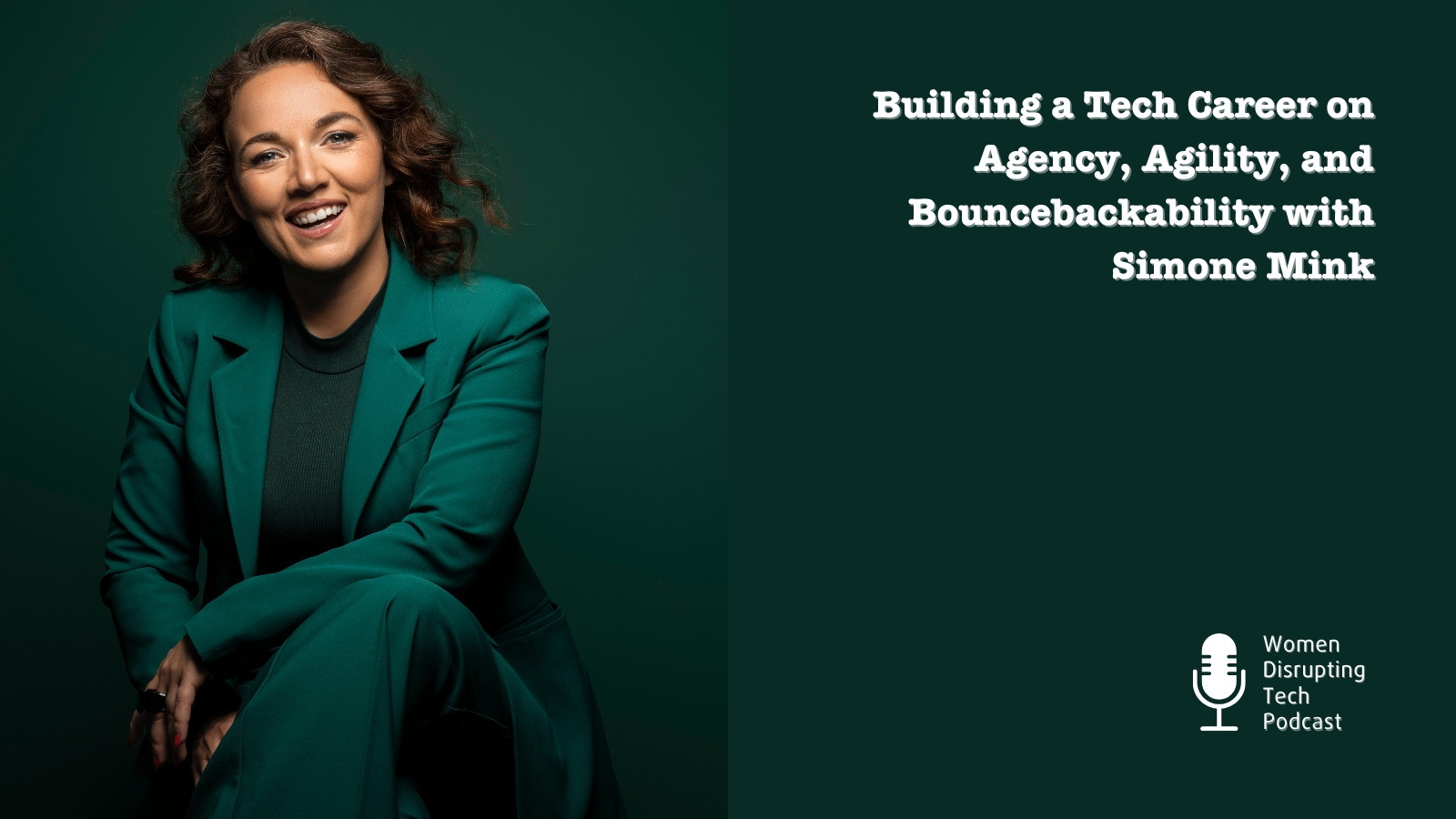
Simone approaches her career with what she calls a Pippi Longstocking mindset. She embraces uncertainty, takes risks before she feels ready, and trusts that she can figure things out along the way.
Here are three things you can learn from her Pippi moments:
You do not need to be “a science person” to code.
Simone challenges the idea that good developers must excel at math, chemistry, or physics. For her, coding clicked because it felt like learning another language and solving puzzles. Curiosity, pattern recognition, and enjoyment of problem-solving mattered more than having the “right” technical background.
Career growth requires self-advocacy.
A defining moment in her career was asking for a do-over conversation when she realized she had pitched herself too cautiously. By clearly articulating what the new team actually needed, she moved from being a trainer to building products inside Mendix. Growth came from naming the gap and stepping into it, not from waiting to be invited.
Resilience without boundaries becomes harmful.
Simone’s burnout showed that mental toughness alone is not a virtue when it ignores physical limits. Being able to push through does not equal sustainability. Learning where her boundaries were changed how she now works and how she leads others.
Together, these lessons matter because they challenge common assumptions about talent, ambition, and success in tech. They point toward careers built on learning, agency, and self-awareness rather than endurance alone.
Or scroll down for the magic moments from the episode.
3 Magic Moments From The Episode
One of the earliest moments in the conversation set the tone for everything that followed. Simone reframed her mother’s fear with a simple “What if I succeed?” This Pippi moment revealed a mindset that would quietly shape her entire career.
Building a muscle for change.
Early in Simone’s career, her mother would ask, “Are you sure you want to do this?” as Simone moved into new roles she had never done before. Over time, that question changed into a confident “I’m sure you’ll nail it.” The shift did not come from reassurance, but from repetition. Each reinvention built trust, showing how confidence compounds when you keep learning and delivering.
Asking for a do-over.
Another defining moment was Simone realizing she had pitched herself too cautiously in a conversation about a new role. Instead of accepting the outcome, she asked for a second conversation and clearly articulated what the team actually needed. That simple but brave move showed rare agency and self-awareness, and became a turning point in her move from trainer to leader.
The off-script perimenopause conversation.
Neither of us expected to talk about perimenopause. Yet when it came up, it added an important layer to the conversation. It brought honesty about hormones, energy, and brain fog, and about what it means to lead while navigating realities that are still rarely discussed in tech. It reminded me how often the most meaningful moments happen when we leave the script behind.
Taken together, these moments show how careers are shaped less by grand plans and more by small decisions, honest conversations, and the courage to name what is really happening.
What was your magical moment from this episode?
Let me know in the comments, or scroll down for practical insights for founders.
Practical Takeaways for Founders
One practical habit that stood out in this conversation is how Simone models boundaries visibly. By not sending messages after work hours, she sets a clear cultural norm that people do not have to be “always on” to be committed or effective.
Use structure to manage uncertainty.
Simone relies on 30–60–90 day plans and breaks large, undefined responsibilities into small, bite-sized pieces. This approach helps her create clarity, manage expectations, and build momentum, especially in roles where success is not clearly defined yet.
Be cautious with AI outputs.
AI can only work with what has been documented. It cannot process the assumptions, context, and lived knowledge that sit in people’s heads. As a founder, it is important to remember that dashboards and models may look complete while still missing what actually matters.
Implement change incrementally.
Simone’s approach to change is simple and disciplined. Take baby steps, focus on easy wins, get people excited, and resist the urge to boil the ocean. Momentum grows when people experience progress they can trust.
Together, these takeaways show that sustainable leadership is built through clarity, restraint, and respect for human limits, not by pushing harder or faster at all costs.
Know a founder who should hear this?
Share this episode with them, or scroll down for an inspiring quote and my personal reflections on the conversation.
The Quote From The Episode
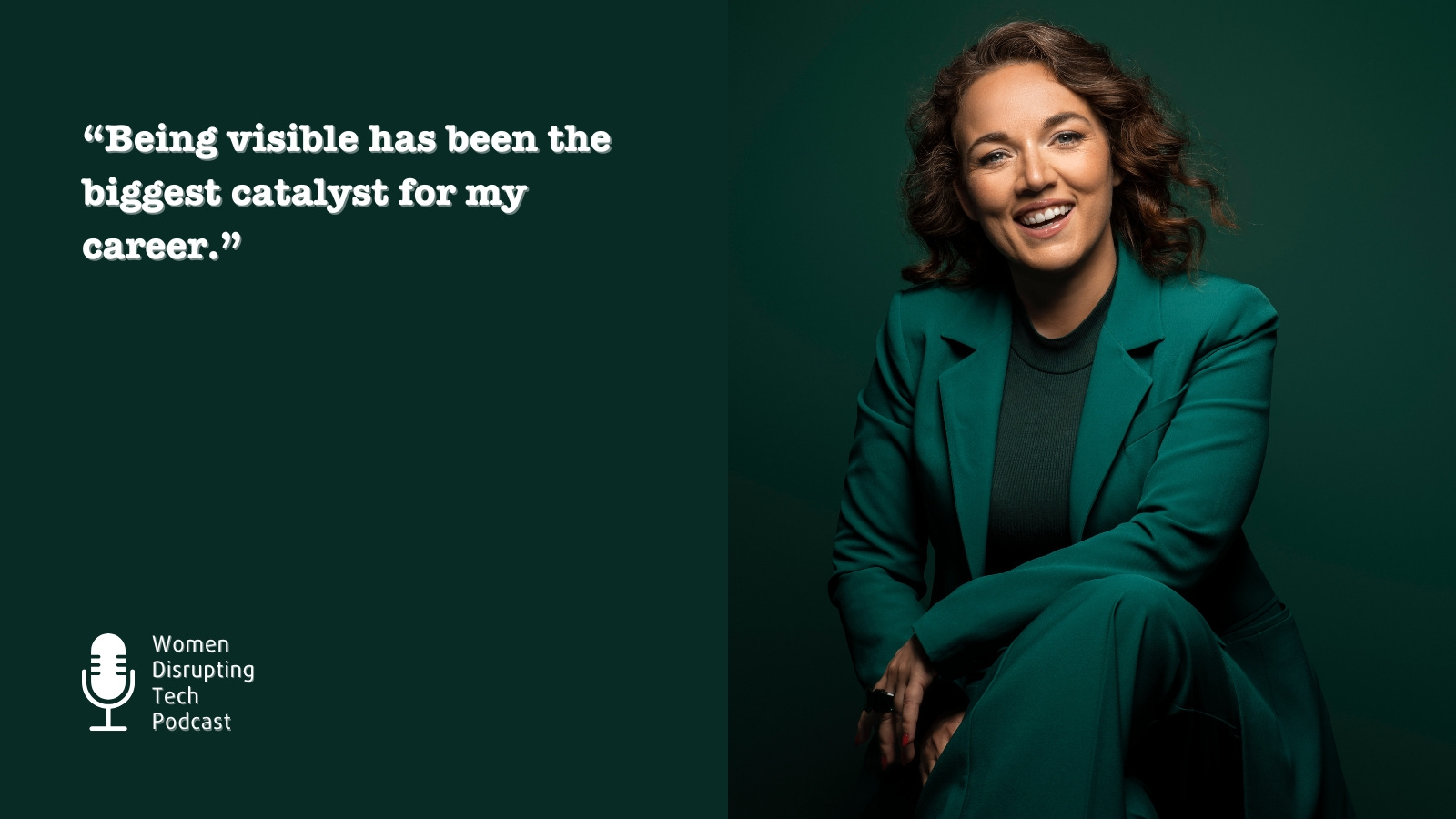
“Being visible has been the biggest catalyst for my career.” - Simone Mink
This quote captures a quiet truth that runs through the entire conversation: Simone’s growth did not come from having the perfect background or waiting to be recognized, but from making her work, her thinking, and her boundaries visible at the moments when it mattered most.
3 Things That Changed The Way I Think
One insight that stayed with me is how intentional we need to be about AI bias. If women are not involved in building systems, and if women’s successes are not recorded as data, those systems will quietly keep reinforcing the same patterns we already see today.
See coding and learning as languages, not gatekeeping skills.
Simone’s experience reframed how I think about technical ability. Coding is not reserved for people who excelled at certain school subjects. Curiosity, pattern recognition, and the joy of solving puzzles matter just as much as formal credentials.
ADHD and structure are not opposites.
I was struck by how deliberately structured Simone is. Her use of 30–60–90 day plans and small, clear steps shows that strong self-imposed structure can support neurodivergence rather than limit it.
Resilience can turn toxic when it is never questioned.
Simone’s story made me reflect on how early life experiences can normalize pushing through at all costs. Resilience is valuable. But without boundaries, it can slowly work against you instead of for you.
Together, these reflections shifted how I think about talent, systems, and sustainability in tech. They point to a future where learning, structure, and care are treated as strengths, not exceptions.
What changed the way you think while listening to this episode? Let me know in the chat.

Or scroll down for links to listen and to learn more about Simone and Mendix.
Coming up on Women Disrupting Tech
Almost all founders I met speak two or more languages. And as we learned in this episode, coding is just another language. So I wondered how we can set up our children to learn languages in an easy and fun way at a young age.
That is where Carolina Bongers and Jungle The Bungle come in. In the next episode, she is our guide as we explore the world of language learning for children aged two to eight.
In this clip, she defines her mission as “unlocking worlds” for children rather than just teaching words.
Want to hear the rest? When you’re subscribed, you’ll find it in your mailbox on 8 January 2026 at 4 pm CET. So stay tuned for more Women Disrupting Tech.
What I Want to Leave You With
Simone’s story is a reminder that there is no such thing as a standard way to build a career in tech. What matters more than background or titles is the willingness to take agency, stay curious, and keep learning, even when the path feels uncertain or unexplored.
This episode also shows that strength is not just about pushing through. Real growth happens when ambition is paired with boundaries, when structure supports rather than constrains, and when we allow ourselves to be visible without burning out. Especially in a system that still rewards endurance over sustainability, that shift matters.
If you’re navigating your own next step in tech, I hope this conversation encourages you to trust what you can learn, name what you need, and build a career that works for you, not just on paper.
Listen to the episode here on Substack or find it on Spotify, Apple Podcasts, or YouTube.
And until the next episode, as always, keep being awesome.
Dirkjan
About Simone Mink
Simone Mink is Head of Portfolio Management at Mendix, where she works at the intersection of product strategy, data-driven decision-making, and cross-functional alignment. In her role, she helps shape how Mendix invests in its product portfolio, aligning R&D, go-to-market, and operations to drive measurable impact, adoption, and long-term growth.
Alongside her work in portfolio management, Simone plays an active role in shaping Mendix’s culture. She is Chair of the Works Council and leads the company’s Neurodiversity ERG, advocating for workplaces where different ways of thinking are recognized as strengths. She also developed mPath, an employee experience suite that reimagined hiring and onboarding and was shortlisted for a Siemens P&O Innovation Award.
Outside Mendix, Simone is a keynote speaker on embracing unlimited growth. Drawing on her own career pivots, she encourages people to challenge self-limiting beliefs and adopt what she calls a Pippi Longstocking mindset: “I have never tried that before, so I think I should definitely be able to do that.”
You can connect with Simone on her website and on LinkedIn.
To hear more of her perspective, you can also listen to her earlier conversation on Journeys of Empowerment.
About Mendix
Mendix is a leading enterprise low-code application development platform that helps organizations build web and mobile applications faster and more collaboratively than traditional software development. Instead of writing all the code by hand, teams use visual modeling and reusable components to design, test, and deploy solutions at scale. The platform supports the full software development lifecycle and enables both technical and non-technical contributors to participate in building meaningful digital solutions.
Founded in Rotterdam in 2005 and now part of Siemens, Mendix is used by thousands of companies around the world to modernize legacy systems, automate workflows, and create apps that solve real business problems with speed and quality.
You can learn more about Mendix on the website and by following Mendix on LinkedIn.


