


Most conversations you’ll hear and read about AI focus on what the technology can do. How it will change companies, industries, and society.
The reality is more sobering. 95% of AI projects fail.
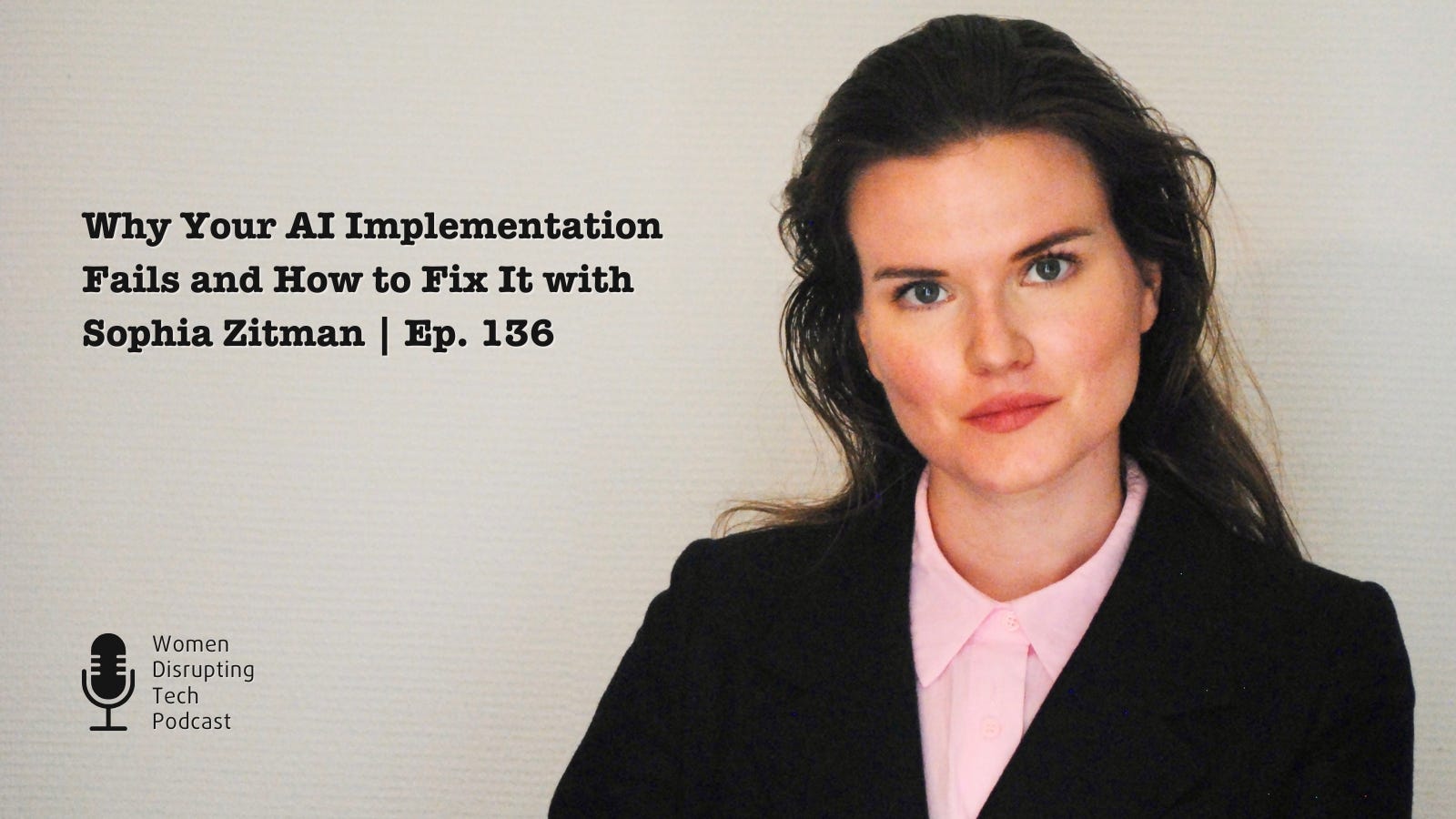
To understand why, I invited Sophia Zitman to join me on episode 136 of Women Disrupting Tech. Sophia is clear about where things go wrong. It’s not the technology that causes most AI implementations to fail. It’s the human factors around it. We also talk about why resistance is often a signal, not a blocker. And how AI can become an equalizer for women in tech when it is built the right way.
Hit play to listen to our conversation. Or scroll down for more about the episode.
3 Lessons From This Conversation
We all know that technology should work for people, and not the other way around. But how to do that has been a well-hidden secret in tech. Sophia shares these three lessons to make AI work for humans.
Lesson 1: Most AI failures are caused by people, not technology
When AI fails, it is rarely because the model is not good enough. Sophia sees fear, misaligned incentives, resistance, and internal politics as the real causes. These human factors derail projects long before technology becomes the issue.
Lesson 2: Successful AI starts with goals and processes, not models
Sophia works top-down. Start with the organization’s vision and long-term goals. Translate those into targets for upper and middle management. Map the processes behind those targets. Do shadow runs to see how work really happens. Only then build the AI.
Lesson 3: AI implementation succeeds or fails on organizational politics
AI does not land in a neutral space. Speed, incentives, and internal agendas of people matter. Even moving too fast can trigger resistance or power struggles. Ignoring the political reality often means even good solutions never make it to production.
Together, these lessons explain why so many AI projects fail during the implementation phase, and what it takes to design AI that people actually use.
Share the episode with someone who needs to hear this. Or scroll down for magic moments.
Magic Moments From The Episode
You can hear how much she enjoys helping people build the right AI. Enthusiasm paired with deep expertise. These moments show what that looks like in practice.
The Erasmus MC emergency care project
Sophia shares how her team worked with the emergency care department at Erasmus MC. The problem was clear. Too many moments at full capacity. The solution was not abstract. A small window into the future that helped doctors and nurses act more proactively. The impact was real. Fewer crisis moments. Better decisions. AI designed to support people under pressure.
Reframing fear around AI making mistakes
Around the 38-minute mark, the conversation turns to resistance. Many people fear AI because it might make mistakes. Sophia calmly reframes that fear. Humans already make plenty of mistakes. The real question is whether outcomes improve overall. If they do, society still benefits.
Listening to resistance instead of shutting it down
Sophia makes a strong case for listening to concerns rather than banning them from a project. Resistance is often a signal. It usually comes from people who understand the organization best. By involving them, AI projects become stronger, and adoption becomes easier.
Together, these moments show why her approach works. Serious expertise, genuine enjoyment, and a focus on people over hype.
What was your favorite moment from the episode? Let me know in the comments.
Practical Takeaways for Founders
Making sure you’re solving the right problem with the right design comes before building. That sounds obvious, but Sophia keeps coming back to that point. Not as theory, but as a way to avoid wasting time on the wrong solution. The takeaways below are where that way of thinking becomes practical.
AI makes starting a company easier
You no longer need an army of developers to get an idea off the ground. AI can handle parts of coding, research, and early decision-making. That makes it easier to test ideas early and build with less capital and fewer dependencies. That shift matters, especially for founders who have historically had less access to resources.
Infrastructure matters more than most founders expect
Building the model is only one part of AI. Infrastructure matters just as much. Data pipelines, systems talking to each other, monitoring, and lifecycle management often decide whether an AI solution survives in practice or collapses quietly.
Hire entrepreneurial tech talent
Sophia looks for people who want to see their work make it to production. Not ticket-driven developers, but people who understand context and take ownership. That mindset separates experiments from systems that actually get used.
This is what it takes from founders to build AI that people actually use. It works when they stay intentional about what they build, why they build it, and who they build it with.
The Quote From The Episode
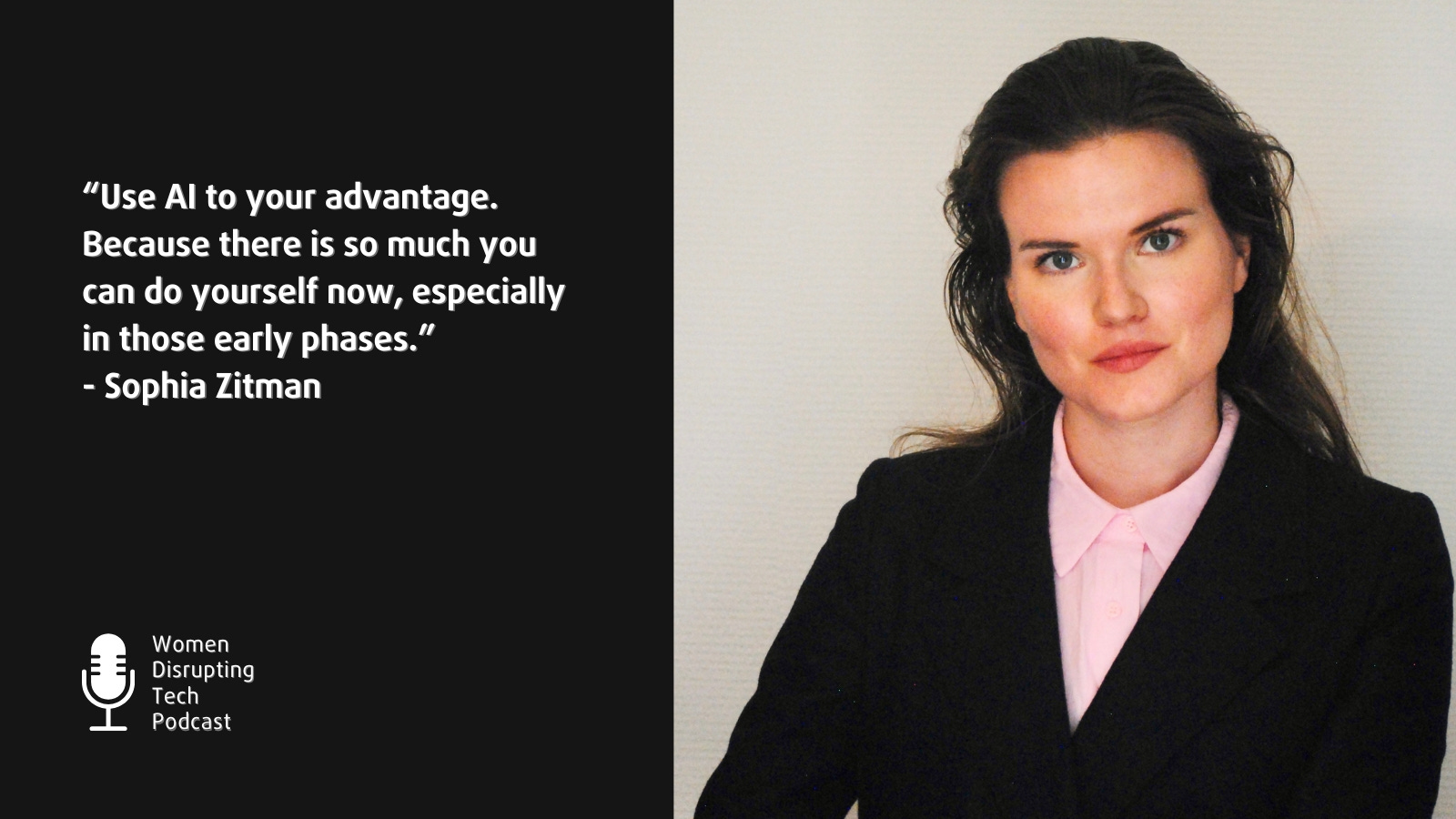
“Use AI to your advantage. Because there is so much you can do yourself now, especially in those early phases.” - Sophia Zitman
Sophia says this when we talk about AI lowering the barrier to building. Not as a promise of shortcuts, but as a shift in agency. Tools that help with coding, research, and early decisions change who gets to experiment, who gets to start, and who gets to keep going without needing large teams or deep pockets.
In the context of the episode, this quote captures her broader point. AI becomes powerful when it helps people move from idea to reality, instead of adding another layer of complexity or dependence.
3 Things That Changed The Way I Think
Sophia’s confidence is quiet but obvious. She doesn’t have to perform expertise. You hear it in statements like this: if you need endless training sessions to explain how to use AI, the design is wrong. It should feel natural to people. A few moments in the conversation changed how I think about building AI.
Regulation should be an enabler, not a blocker
“I would like to see regulations actually stimulate the use of AI, but in a safe and sound environment and not saying not do AI.” That framing stuck with me. It moves the conversation away from fear and fines. Toward shared responsibility, agency, and better outcomes.
Teaching children AI builds agency
Sophia argues that teaching children AI in school matters. Avoiding it makes no sense. Mindful experimentation helps people understand what AI can and cannot do. Just like computers and the internet before it, access builds confidence.
Building FundingCoach with more intention
Her advice landed close to home. Start with the problem. Design before building. Be clear about what you are optimizing for. Tech for the sake of tech almost guarantees unwanted bias. This reinforced how intentional I need to stay while developing FundingCoach.
Together, these shifts pulled my focus back to agency. To the people who design the system. And how early choices shape what AI becomes in practice.
What changed your thinking while listening? I’d love to hear in the chat.

Coming up on Women Disrupting Tech
In episode 137, we return to the theme of relocation. Judith Roetgering is my guest as we explore why proper relocation support for international hires is key to helping them deliver their best work.
Listen to the short clip below to hear Judith describe what a real soft landing looks like for someone moving across the world, and why that matters just as much as the contract you sign.
If you are hiring internationally or dreaming about working abroad yourself, stay tuned for the full conversation in episode 137 of Women Disrupting Tech. When you’re subscribed, you’ll find it in your mailbox on 29 January 2026 at 4 pm CET.
And until the next episode, as always, keep being awesome.
Dirkjan
What I want to leave you with
Sophia ends the conversation with advice that will stay with you. Especially if you are considering a career in tech. “Just do it. Just go there. Is it sometimes harder? Is it sometimes unfair? Yes. But is there a reason not to do it? Absolutely not.”
You can listen the full conversation, with many more moments like this, by hitting the play button above or by listening on Spotify, Apple Podcasts or YouTube.
About Sophia Zitman
Sophia Zitman works with organizations to design and ship AI products that hold up in the real world. With a background in engineering and consulting, she bridges technical teams, product strategy, and organizational realities. Her focus is not just on building AI solutions, but on building the ways of working needed to sustain them.
At the time of the recording, Sophia was Director of AI Projects at Kickstart AI, where she helped organizations move beyond AI hype and toward solutions that actually work for people.
Sophia has since joined Just Horizons, a US-based nonprofit focused on ensuring AI is developed and used in ways that genuinely benefit humanity. There, she leads the development of the Ethical AI Index.
You can connect with Sophia Zitman on LinkedIn.


