


Imagine stepping off a plane in a country you don’t know. And in two days, you start a new job at a company that you only know from online meetings.
On paper, everything is arranged, but nothing feels familiar. Conversations move differently. Rules are implied, not explained. Even small things take effort, and you don’t yet know which questions are safe to ask.
That feeling is where my conversation with Judith Roetgering begins.
Because when we talk about international hiring, we often talk about the ROI, speed, perks, and talent. What we talk about far less is what it feels like to be the person who has to make that leap. And why, despite AI, businesses still grow and thrive with people.
Hit play to hear how you can use relocation as a key ingredient to your international hiring strategy.
Or scroll down to discover lessons from the episode, magic moments, and practical takeaways for your fast-growing tech company.
3 Lessons From This Conversation

If there’s one thing this conversation makes clear, it’s that international hiring only works when people are given a soft landing. Not just a contract and a start date, but the human-to-human support to actually settle, belong, and do their best work. Here are three lessons that build on this.
1. Hiring someone internationally means taking responsibility beyond the job
When someone accepts an international role, they are not just switching employers. They are changing countries, routines, and support systems. Judith makes it clear that when companies treat relocation as an afterthought, that weight lands entirely on the employee, often during their very first months.
People who spend their first months firefighting life outside of work rarely get the space to succeed at work.
2. Language is the moment where inclusion becomes real or not
Feeling included shows up in everyday interactions, not in intentions. As soon as an international hire joins, the question of language stops being theoretical. Meetings, documents, and even lunch conversations signal if your company is ready to accept the newcomer.
Judith is blunt here: if a company is not willing to switch its internal language, it should rethink hiring internationally.
3. The hardest moment often comes six months after the move
The first months are usually full of energy. New job, new country, new start. Judith points out that the real test comes later, when the novelty wears off, and daily life sets in. That is when doubts surface, and support matters most.
Most departures don’t come out of nowhere. They build quietly over time.
In the end, international hiring is about slowing down early enough to give people the soft landing they need, before problems show up later.
Or scroll down for the magic moments that made these lessons impossible to ignore.
Magic Moments From The Episode
During our conversation, Judith shared three stories that bring her point about having a human touch in hiring international talent to life.
Landing in India for the first time
Judith describes arriving in India and realizing how disorienting it feels when none of the familiar rules apply. The noise, the mountain of paper, the way people move and communicate. It is not fear she describes, but alertness. The constant awareness that you are navigating a world where your instincts can no longer guide you. It’s easy to hear how that moment shaped her sensitivity to what internationals experience when they arrive somewhere new.
Helping the Italian couple turn their hesitation into settling in.
One of the most human moments comes when Judith talks about relocating an Italian couple in their fifties. They were not eager to move. Their lives were rooted in Italy. What changed things was not persuasion, but her personal touch. Picking them up from the airport. Joining house viewings. Sitting next to them while opening bank accounts. Over time, their hesitation turned into a sense of settling in.
The South African team that slowly disappeared
Not all her anecdotes have a happy ending, though. Judith shares the story of a company that hired a team of developers from South Africa. On paper, everything made sense. In practice, the company never changed how it worked internally. And within twelve months, all had left the company. It’s a clear example of what happens when integration is not a two-way street.
Her stories show what makes the difference between international hires settling in or quietly opting out. Just clear observations without drama.
What was the moment in this episode that stood out to you most? Let me know in the comments
Or keep scrolling for practical takeaways you can apply as a founder or hiring manager.
Practical Takeaways For Founders
If you want international hires to get a soft landing instead of a rough start, there are a few things you can put in place before they arrive.
Get your legal hiring setup in order early
If you know you will need people from outside the EU, do not wait until you find “the one” to look at visas. Becoming a recognised sponsor with immigration authorities can take months, and using an external Employer of Record as a bridge also needs preparation.
The point Judith makes is simple. If your legal setup lags behind your hiring needs, you either lose great people or end up in a rush that adds stress for everyone.
Put relocation costs into your funding story, not into “unexpected extras.”
When you raise your next round, be honest with yourself about where the talent will come from. If the skills you need are not available locally, international hiring is not a nice-to-have. It is part of how you will hit the numbers you promise to investors.
Judith encourages founders to forecast relocation costs upfront. Not as a footnote, but as part of the plan to get the right people in the right place at the right time.
Design integration with a buddy, not just an onboarding checklist
A contract, laptop, and onboarding deck do not make a soft landing. People do. Pairing international hires with a local buddy who shows them how things work in the company and in daily life can make a bigger difference than any welcome gift.
Judith sees this as a way to share responsibility. The company signals that the new hire is not left to figure everything out alone, and the team learns to see onboarding as a shared effort.
In practice, these takeaways all show that a soft landing is built in advance, through choices about timing, budget, and how you involve your team.
Know a founder or hiring manager who is about to hire internationally? Use the share button below to tell them about this episode.
Quote from the episode:
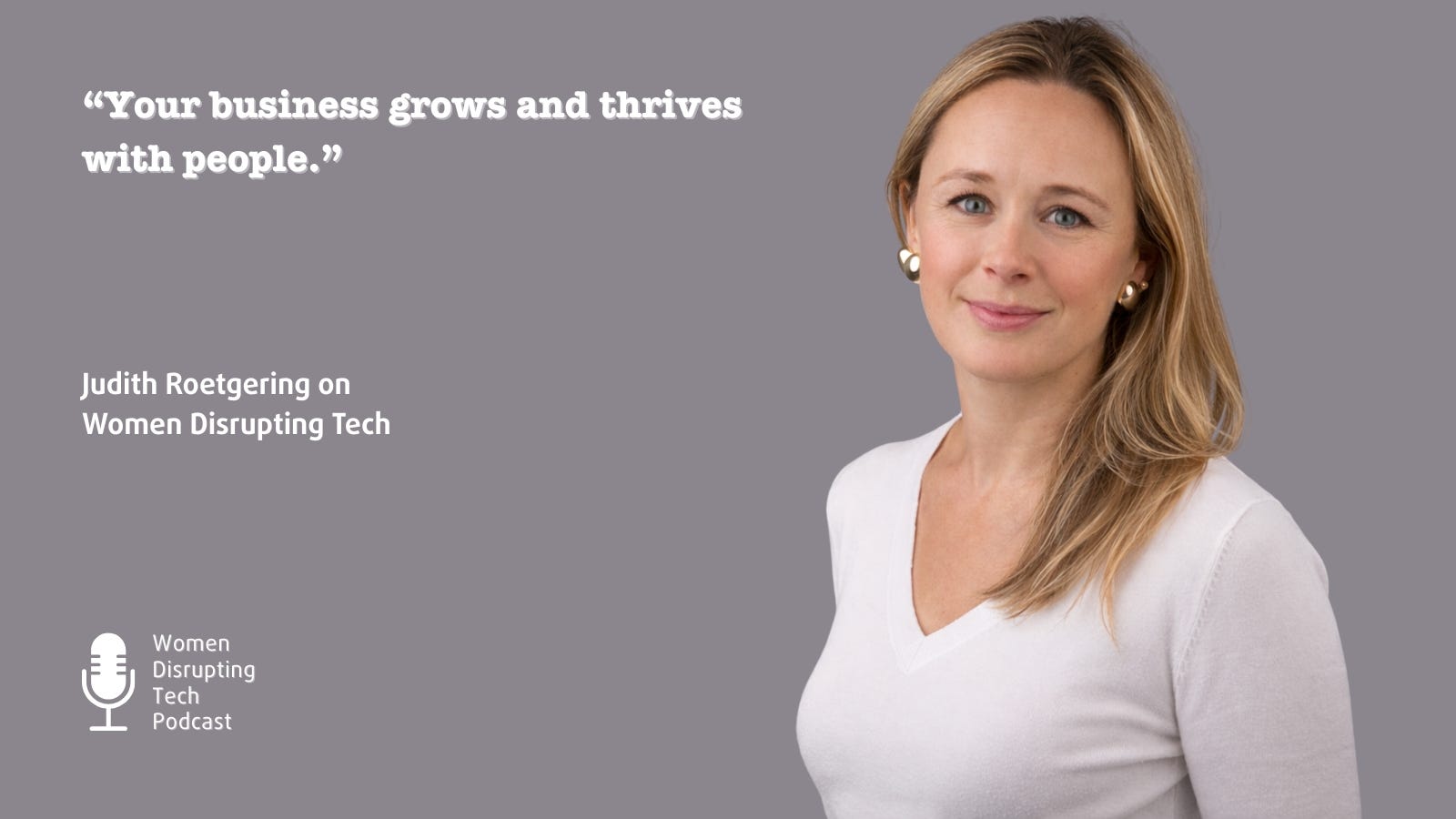
“Your business grows and thrives with people.” - Judith Roetgering
Judith explains that while technology and AI are important, startups and scaleups ultimately depend on human talent to hit the growth targets promised to investors. She points out that if you are not able to make the following step in growing your team, you cannot hit the growth that you are aiming for together with your investors.
3 Things That Changed The Way I Think
Having worked outside the Netherlands myself, I have some experience with relocating. That said, this conversation helped me change how I look at international hiring in a few important ways.
Hiring more internationals at once is not automatically better
From my conversation with Johanna Spiller, I remembered her tip to hire at least two women to make integration easier. And I figured this could work for internationals, too. But Judith added an important nuance. If you do not design how they integrate, you risk creating a separate bubble instead of one team. The question is not “how many internationals do we hire” but “how do we make sure they are part of the whole group from day one.”
Capability gaps matter more than job titles or passports
Judith’s use of the Working Genius Assessment at Rehive confirmed how I think about hiring. Instead of starting from “we need another person in this role,” she looks at which types of energy and strengths are missing in the team. That way, international hiring becomes less about filling a vacancy and more about finding someone whose way of working actually complements the group.
AI as a way to enable the human side of relocation
I am used to hearing AI framed as a way to speed things up or cut costs. Judith talks about it differently. For her, AI is there to handle repetitive tasks so she has more time for the personal conversations that make a move feel safe. I like that framing. It makes AI a tool to create more space for human work, not a reason to remove it.
Seen together, these shifts make international hiring feel less like a check-box for international growth and more like something you keep designing as you grow.
What changed your thinking as you listened to this episode? I would love to hear from you in the chat.

Coming Up on Women Disrupting Tech
In the next episode of Women Disrupting Tech, I talk to Philipp Omenitsch about what the data behind startup funding actually shows, and what founders often get wrong about it. Philipp is a former founder and CTO who now works with large-scale pitch deck data through the Founder Files.
In the short clip from the episode, Philipp explains why we need more female-led startups and why fear of funding outcomes should not be the reason to opt out. It’s a grounded reminder that experience matters, and that starting is often the most important step.
Listen to the clip now, and stay tuned for the full conversation in the next episode, where we unpack what 17,000 pitch decks reveal about fundraising, experience, and how the system really works.
What I Want To Leave You With
Even though this episode is about Judith’s work, our conversation reminded me of my own first experience abroad.
In my early twenties, I moved to New York for a five-month assignment. I arrived knowing no one. Work started two days later. On paper, it was simple. In reality, I was learning a new city, a new way of working, and a new system all at once. I remember having to write cheques for rent without a local bank account or credit card, hoping I was doing it right.
I was lucky. People around me were kind and helped when I dared to ask for it. Still, I felt lonely and a bit exposed. It was only five months, and I would not want to have missed the experience. Yet listening to Judith, I kept wondering what it would have been like if I had moved not for a temporary assignment, but for a permanent role. With a partner. With kids. With a whole life to move, not just a suitcase.
That is where her focus on a soft landing starts to feel different. It is no longer about being “brave enough” to figure it out. It is about how much responsibility a company takes for the humans they invite into its growth story.
You can listen to our entire conversation on Spotify, Apple Podcasts, or YouTube.
About Judith Roetgering
Judith Roetgering is driven by a love for people and international growth. She spent more than 16 years in the fashion world with brands like Karl Lagerfeld and Mexx, living and working across countries and learning how much cultural connection and the right team matter.
Later, she founded Your Talent Agency, a recruitment and relocation agency for international talent that grew to over €4 million in annual revenue and supported companies such as Just Eat Takeaway, Otrium, and ThreatFabric.
With Rehive People, she now helps startups and scaleups relocate and onboard international employees smoothly, from visas and immigration to day-to-day settling in. Her focus is simple: impactful onboarding, a strong cultural match, and international hires who do not just arrive, but stay.
You can connect with Judith on LinkedIn.
About Rehive People
Rehive People helps companies relocate and integrate international talent into their teams. They combine visa and immigration support with hands-on relocation guidance, from housing and paperwork to cultural integration and daily life in the Netherlands. With a mix of proven packages and modular services, they work alongside startups and scaleups to create a clear international talent growth plan, support well-being and job satisfaction, and strengthen cultural fit. Their focus is simple: make onboarding international hires smooth and human, so companies can grow sustainably while people feel welcome enough to stay.
You can learn more about Rehive People on their website and by following them on LinkedIn.


