


Many founders wear hustle, being busy, and feeling exhausted as a badge of honor. By following the startup playbook to the letter, they can show that they’re doing everything right to be successful.
Except, they follow someone else’s playbook. With devastating outcomes.
In this episode of Women Disrupting Tech, Valerie explains why following the playbook often pushes founders into hustle and survival mode instead of sustainable success. We talk about what happens when you stop confusing busyness with impact, start building your company in alignment with your values, and see profit, even in impact-driven companies, as the oxygen that allows a mission to succeed.
To listen to our conversation, press play or keep reading to explore what this conversation reveals.
3 Lessons From This Conversation
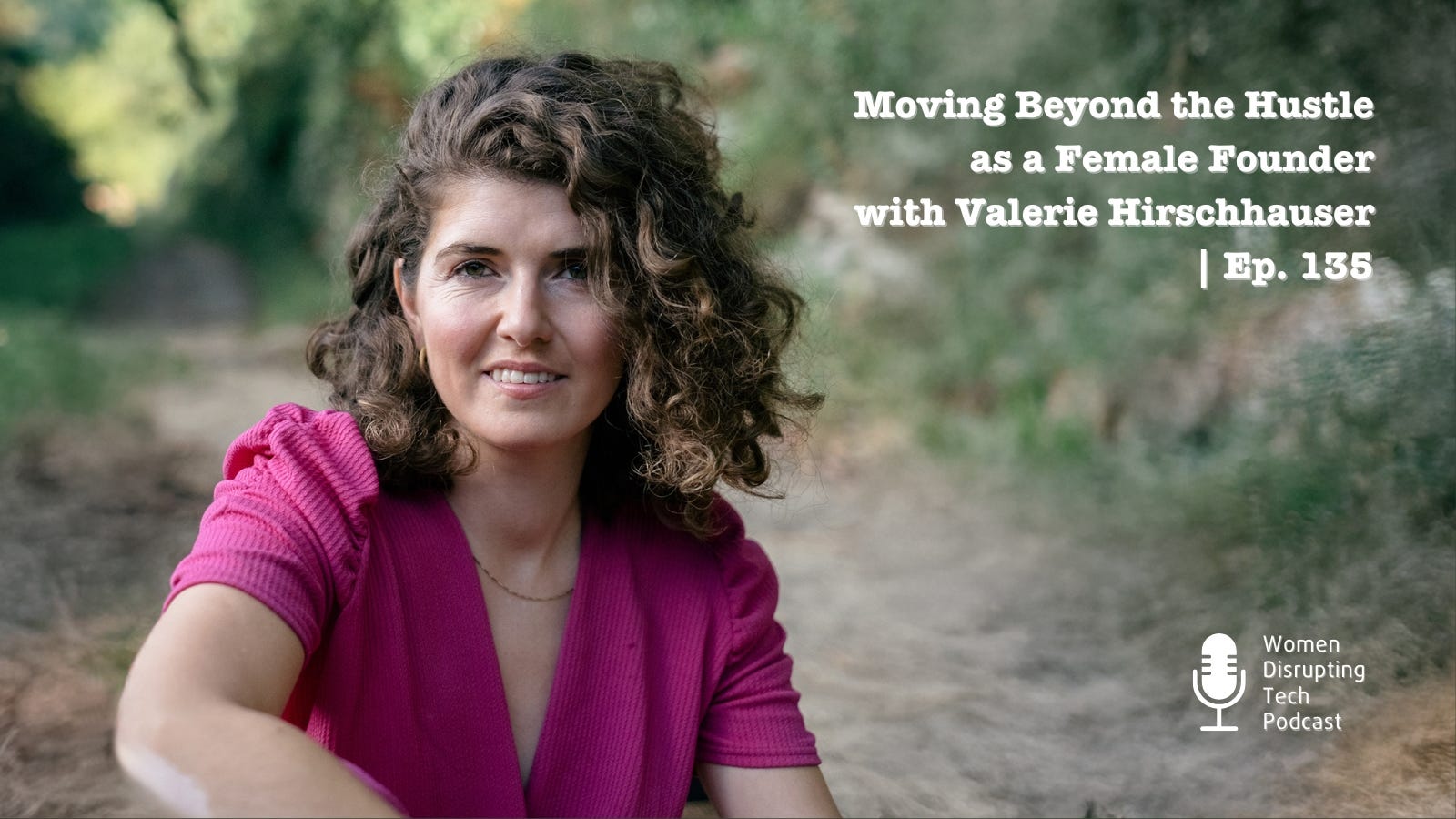
Valerie challenges the idea that success comes from executing the startup playbook well. Her experience shows what happens when founders try to force a misaligned system to work. Here’s what she wants you to take away:
Hustle culture is a system glitch
Valerie describes hustle culture as a glitch in the system. Exhaustion is worn as a badge of honor. Long hours are praised as ambition. But if 80- or 100-hour weeks are required to keep a company running, something is broken. Not the founder, but the business model or expectations shaped by the default model.
Build what feels right, not what gets approval.
A big turning point for her was realizing how much of her ambition was driven by external signals. Clicks. Praise. Doing things “the right way.” Following the playbook instead of questioning whether it actually fits. Her advice to founders is not to ignore feedback, but to stop letting approval override alignment with their own values and beliefs.
Profit is oxygen for the mission.
Profit isn’t a betrayal of purpose—not even in impact-driven startups. It’s a design requirement. Without it, founders compensate with longer hours, more pressure, and personal sacrifice. Seeing profit as oxygen shifts the focus from proving intent to building something that lasts.
These lessons dismantle the belief that more effort is the answer. Real success comes from designing a business that fits your values, your energy, and the impact you want to create—not from executing someone else’s playbook better.
Know someone who is stuck in hustle mode? Share this episode with them to help them rediscover what freedom can actually feel like.
Or continue reading below for the magic moments.
3 Magic Moments From the Episode
Throughout the conversation, three moments showed what changes when founders stop forcing themselves to fit the startup playbook and start building in alignment with their values.
Intuition belongs in the boardroom.
Valerie challenges the idea that good decisions need to be defensible. Data feels safe. You can explain it, justify it, or hide behind it. But when values, people, and long-term impact are at stake, intuition matters. Not instead of data—alongside it. Especially when the playbook stops giving clear answers.
Freedom comes from alignment.
Valerie comes back to this point through lived experience. Freedom is not about being your own boss or having a flexible schedule. It shows up when you no longer need to constantly prove that you are doing things the “right” way. When decisions are guided by values instead of expectations, work stops feeling like a trap, even when it is demanding.
The ocean moment
At the end of the episode, Valerie jokes about taking her paddle board out after we talk. It’s a small moment, but it captures the shift perfectly. When your business doesn’t rely on constant hustle to stay afloat, you get space back. Space to think, to choose joy, to stop filling every moment with unnecessary work.
These moments all point to the same thing. Alignment isn’t abstract. You feel it in how decisions get made, how pressure shows up, and how much space you have to breathe.
What was your favorite moment from the episode? I’d love to hear it in the comments.
Practical Takeaways for Founders
This episode offers questions to check if you’re building in alignment or compensating for a broken system. Here are three that stood out.
Am I busy, or am I actually moving the needle?
When Valerie looks at founders’ calendars, she often sees the same pattern. Half the agenda is filled with marginal busy work. Tasks that appear to signal momentum. To investors. To the outside world. To themselves. But activity is not the same as progress. Many of the things that truly move the needle require thinking, prioritizing, and making fewer, better decisions. And those are much harder to perform visibly.
Am I optimizing my days for time, or for energy?
Most startup schedules are built around availability and meetings. Valerie suggests starting from a different place. When do you think clearly, make good decisions, and create real value? Designing your work around energy instead of hours is a way to step out of autopilot and back into authorship.
What’s the right funding for my business and values, really?
Not every company is meant to grow at VC speed. Chasing the fanciest fund can quietly reintroduce the same pressure as the startup playbook. A better question is whether the type of capital you pursue supports the pace, priorities, and kind of success you actually want.
These questions help founders stop fixing problems with more effort. They shift the focus to redesigning the system so it doesn’t require constant hustle.
Quote of the episode
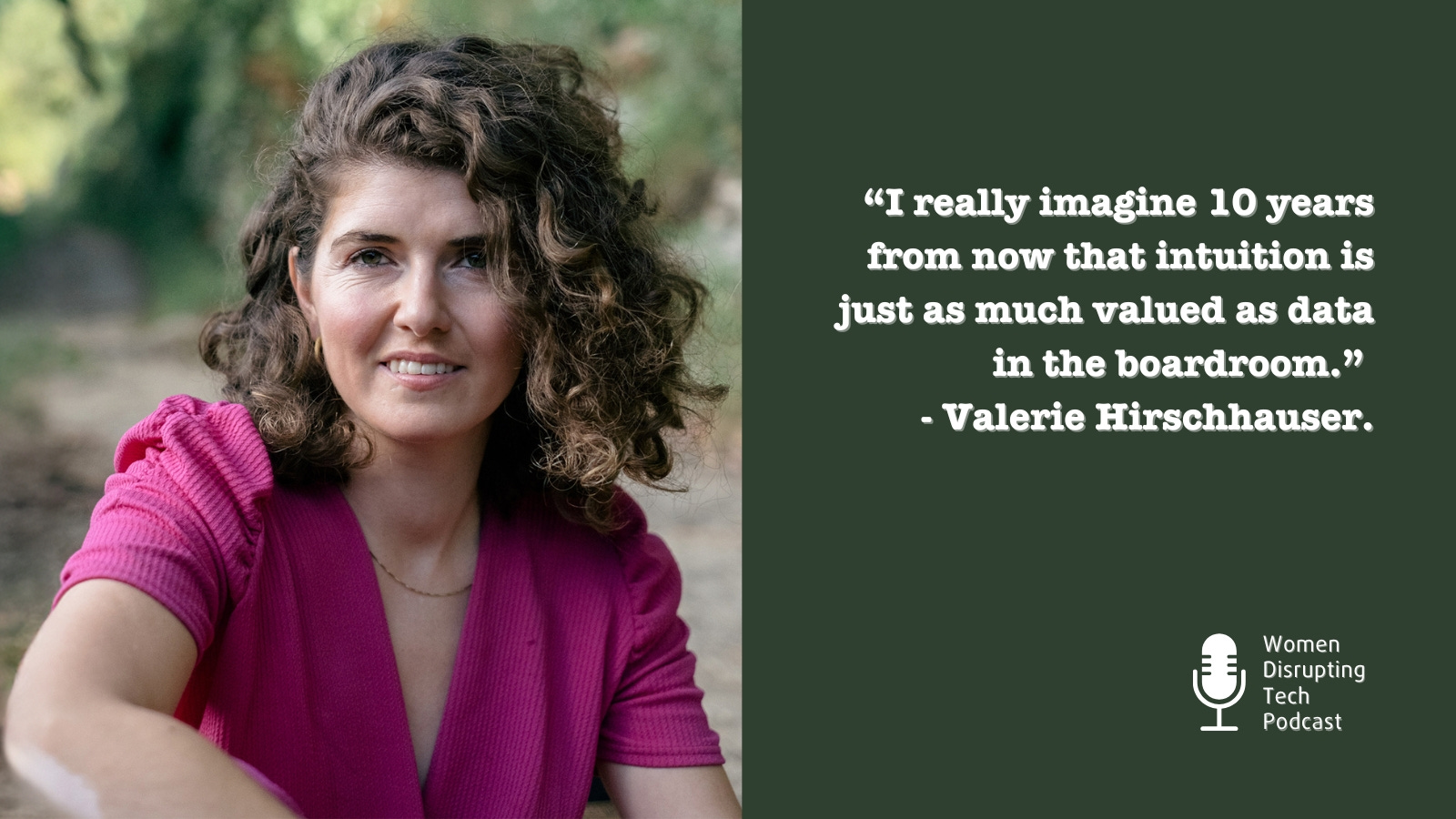
“I really imagine 10 years from now that intuition is valued as much as data in the boardroom.” - Valerie Hirschhauser.
3 Things That Changed The Way I Think
Once basic needs are met, staying on autopilot stops being about survival. It becomes a question of agency. Of whether you are willing to define success for yourself, or let external expectations quietly shape your choices.
Hustle as a trauma response.
Valerie’s idea of hustle as a system glitch was new to me and helped me connect the dots. When exhaustion becomes normal, it’s rarely about ambition or resilience. It’s usually a learned response to constant pressure, misaligned expectations, or the fear of falling behind. Hustle isn’t the fix. It’s the symptom.
Intuition belongs in the boardroom.
This was genuinely new for me. In tech and investing, data is treated as the safest input. Intuition is often seen as vague or risky. Valerie flipped that framing. Intuition is not the opposite of data. It is what helps you decide when data is incomplete, misleading, or optimized for the wrong outcome. Seeing intuition as a legitimate boardroom asset changed how I think about leadership and decision-making.
Doing what you love does not automatically create freedom.
One piece of advice I often hear in the ecosystem is that you need to fall in love with the problem. This episode made me question whether that actually solves for hustle and burnout. Or whether it keeps founders locked in longer. Enjoyment can mask overload. Especially when the story becomes, “You used to like this.” That tension feels important to sit with, not resolve too quickly.
These shifts reinforced one idea. Alignment isn’t a nice-to-have. It’s what determines whether success is sustainable or quietly draining.
Curious how this lands for you. What, if anything, shifted in your thinking? Let me know in the chat.

Coming up on Women Disrupting Tech
In episode 136, Sophia Zitman is my guest to talk about why 95% of AI projects fail, and what it really means to design AI for people.
Listen to the clip to hear how Sophia thinks about building AI that benefits patients, nurses, doctors, and organizations at the same time.
And stay tuned for the full episode, where we go deeper into why so many AI projects fail in practice, how human systems shape outcomes, and what it takes to build AI that actually makes it into the real world.
What I Want to Leave You With
Building a successful business shouldn’t require setting yourself on fire to keep the mission warm. When it does, something in the system is off.
True leadership isn’t about choosing between heart and strength. It’s about holding both. Having the courage to build differently while staying grounded in what actually sustains you and the people around you. Your well-being isn’t separate from the company. It’s one of its most valuable assets.
When founders move from survival mode to intentionality, the work changes. Impact gets more focused. Decisions get clearer. And profitability stops feeling like a compromise and starts acting as the fuel that makes long-term impact possible.
Thanks for reading, and until the next episode, keep being awesome!
About Valerie Hirschhauser
Valerie Hirschhauser is an impact entrepreneur and leadership advisor supporting female founders who want to build successful businesses on their own terms.
After founding and selling Frank About Tea, Valerie experienced firsthand how hustle culture can pull founders away from their values, creativity, and well-being. That experience led her to start OneMillionWomen, a leadership platform focused on helping women build bold, sustainable companies without burning out.
Alongside her work with OneMillionWomen, Valerie advises and coaches founders on strategy and fundraising. She brings over a decade of experience in agrifood, climate, and sustainability, and has helped raise millions, shape impact strategies, and serve on advisory boards across Europe and beyond.
Valerie believes the future of leadership lies in combining heart with strength, and designing success that is both impactful and sustainable.
You can connect with Valerie on LinkedIn and learn more about her leadership support services on the OneMillionWomen website.


